OCAD University | Instructors: Kate Hartman & Nicholas Puckett | Fall 2024
Project Description
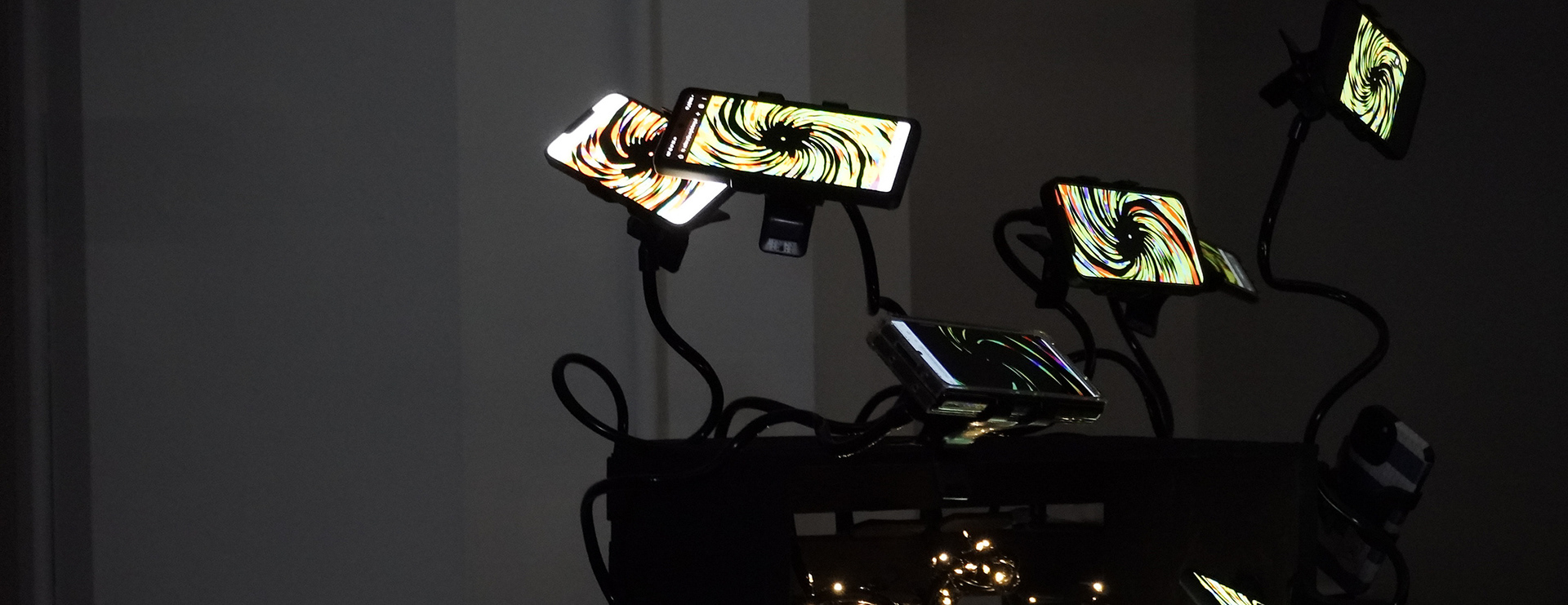
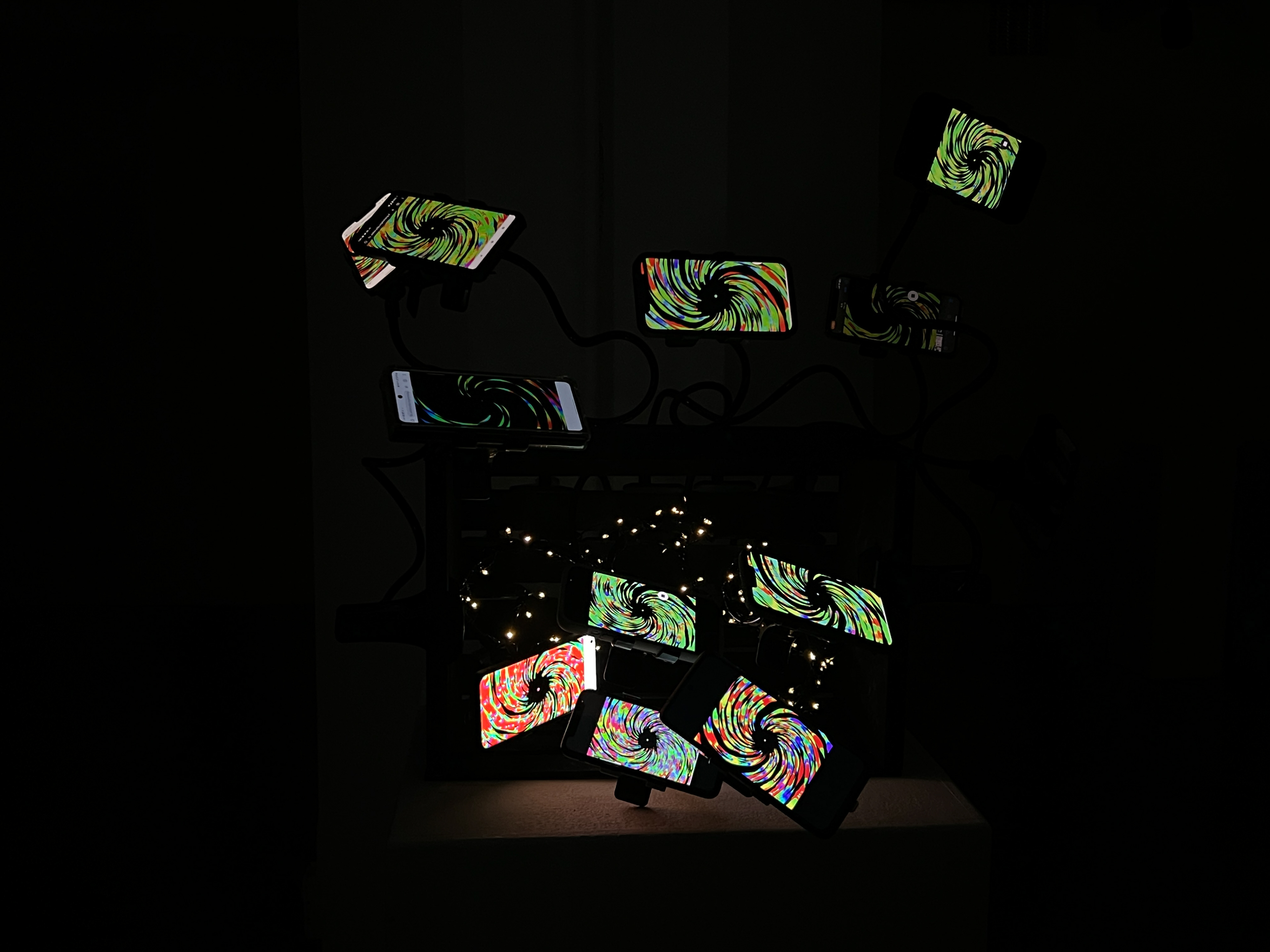
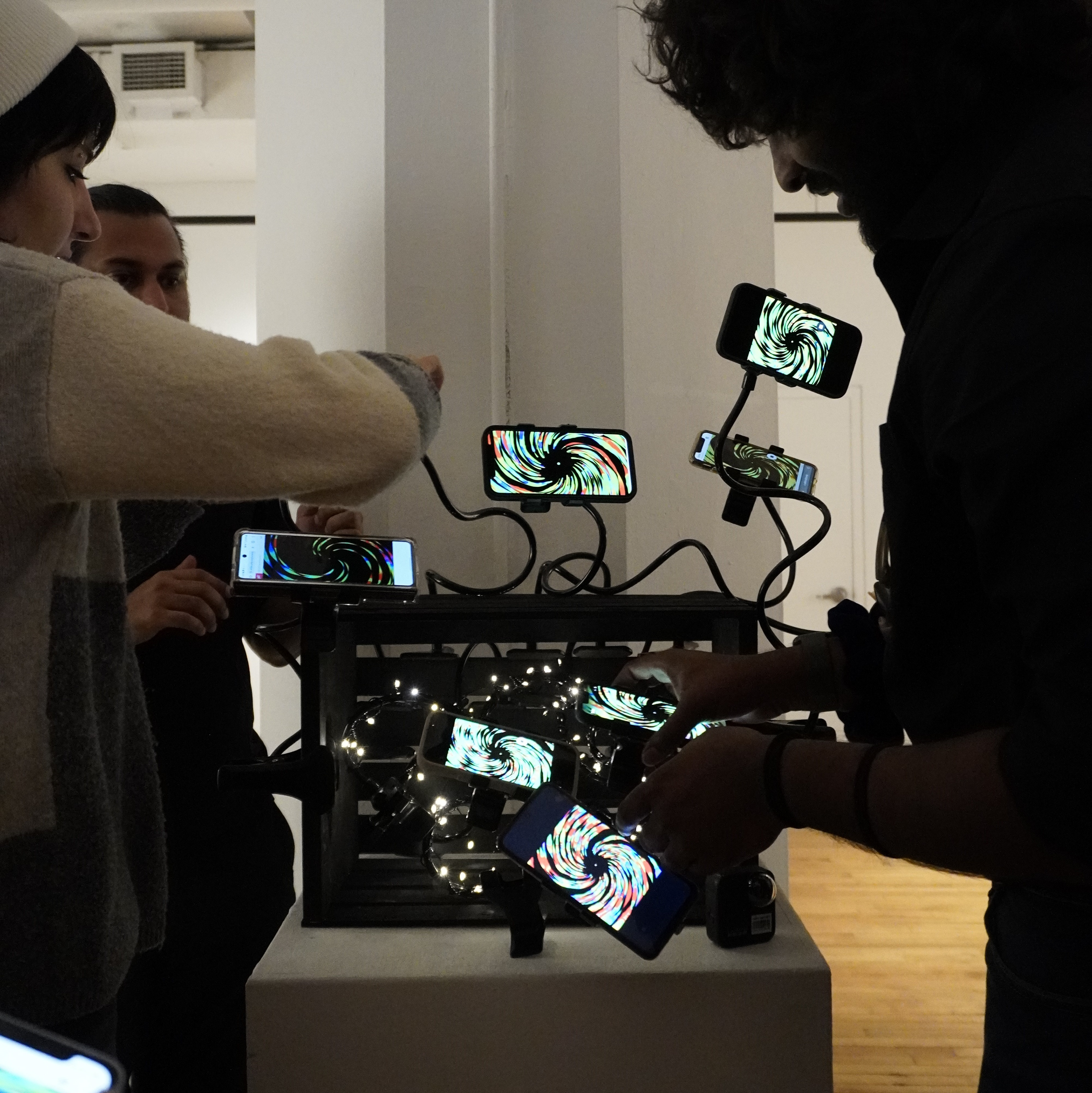
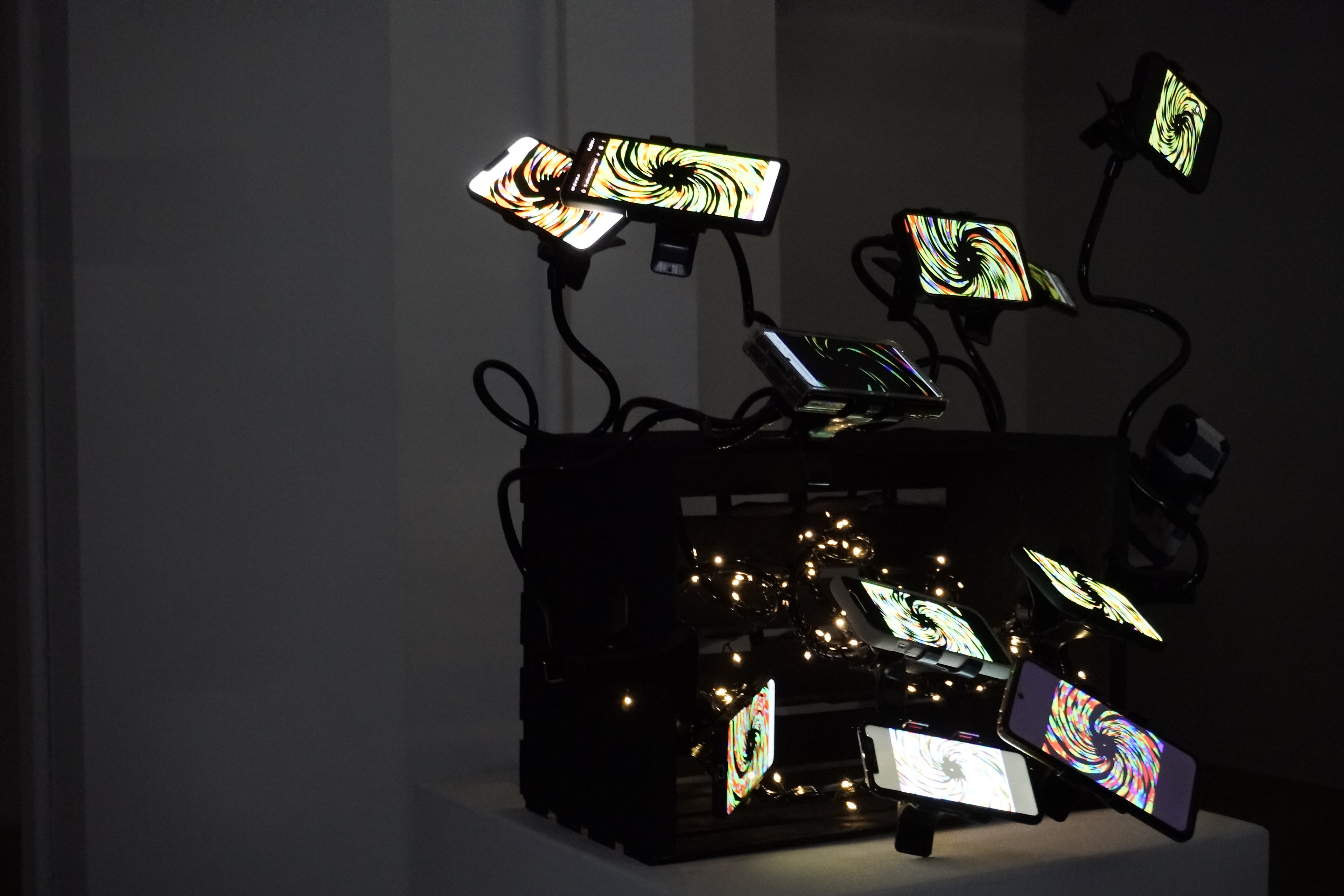
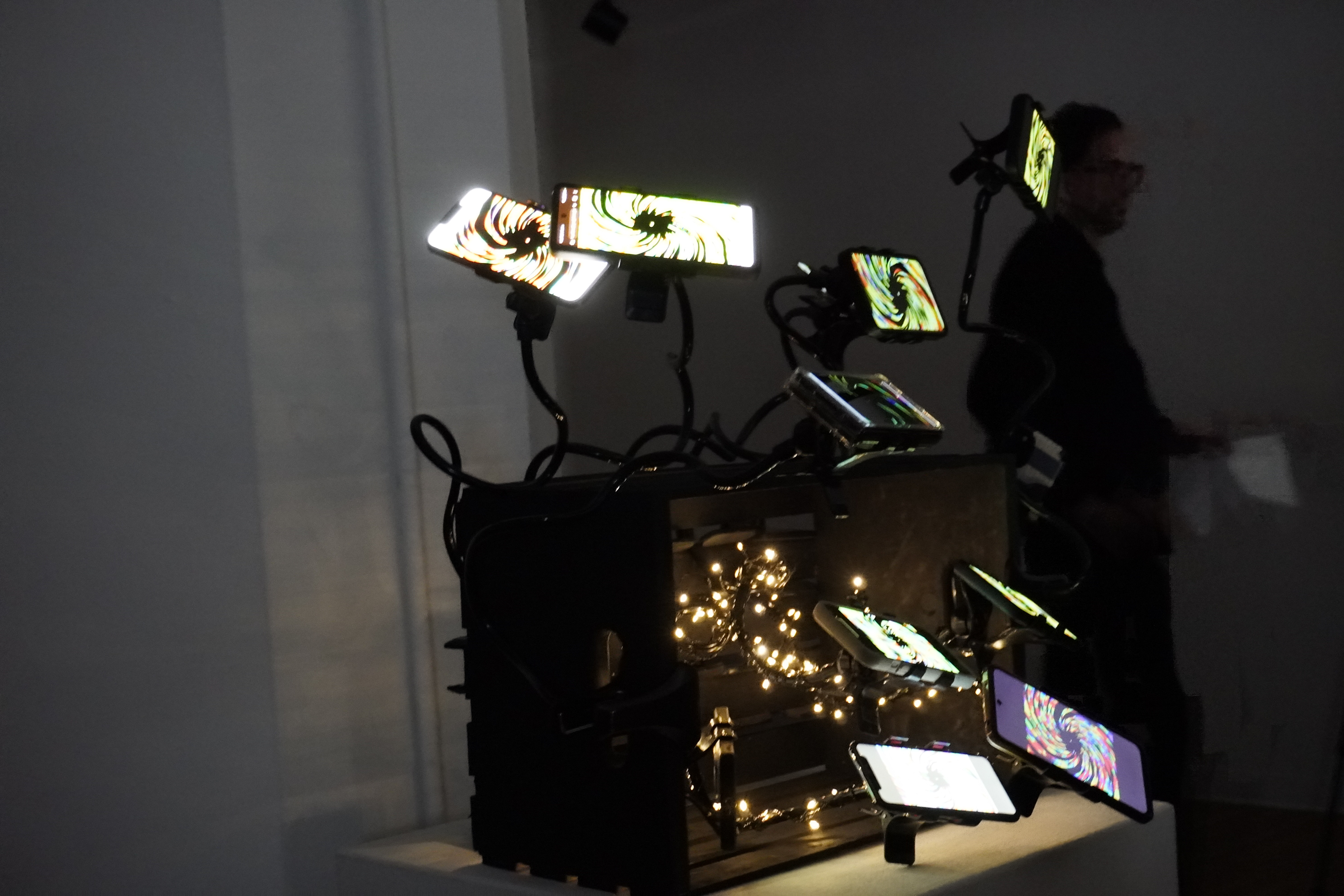
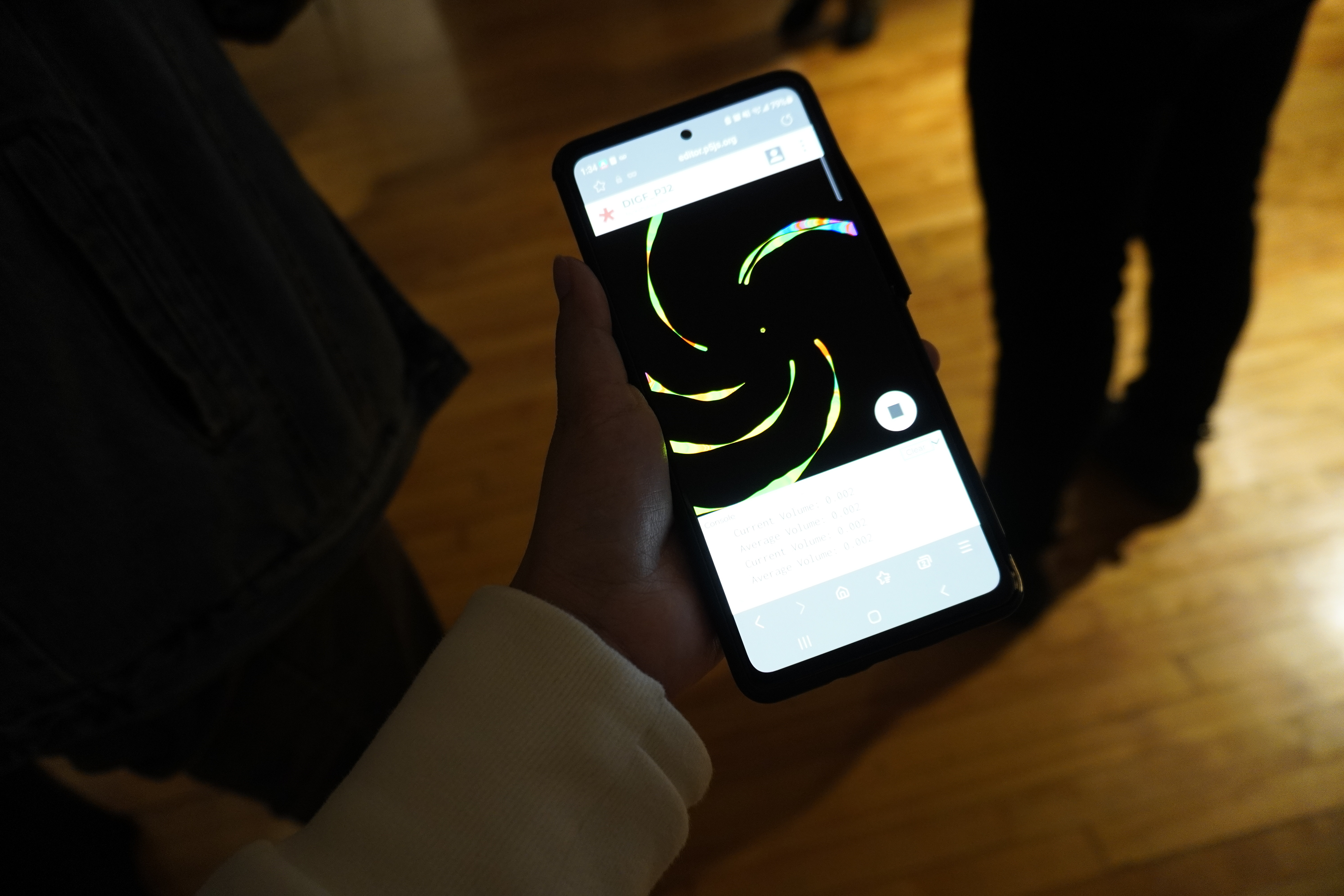
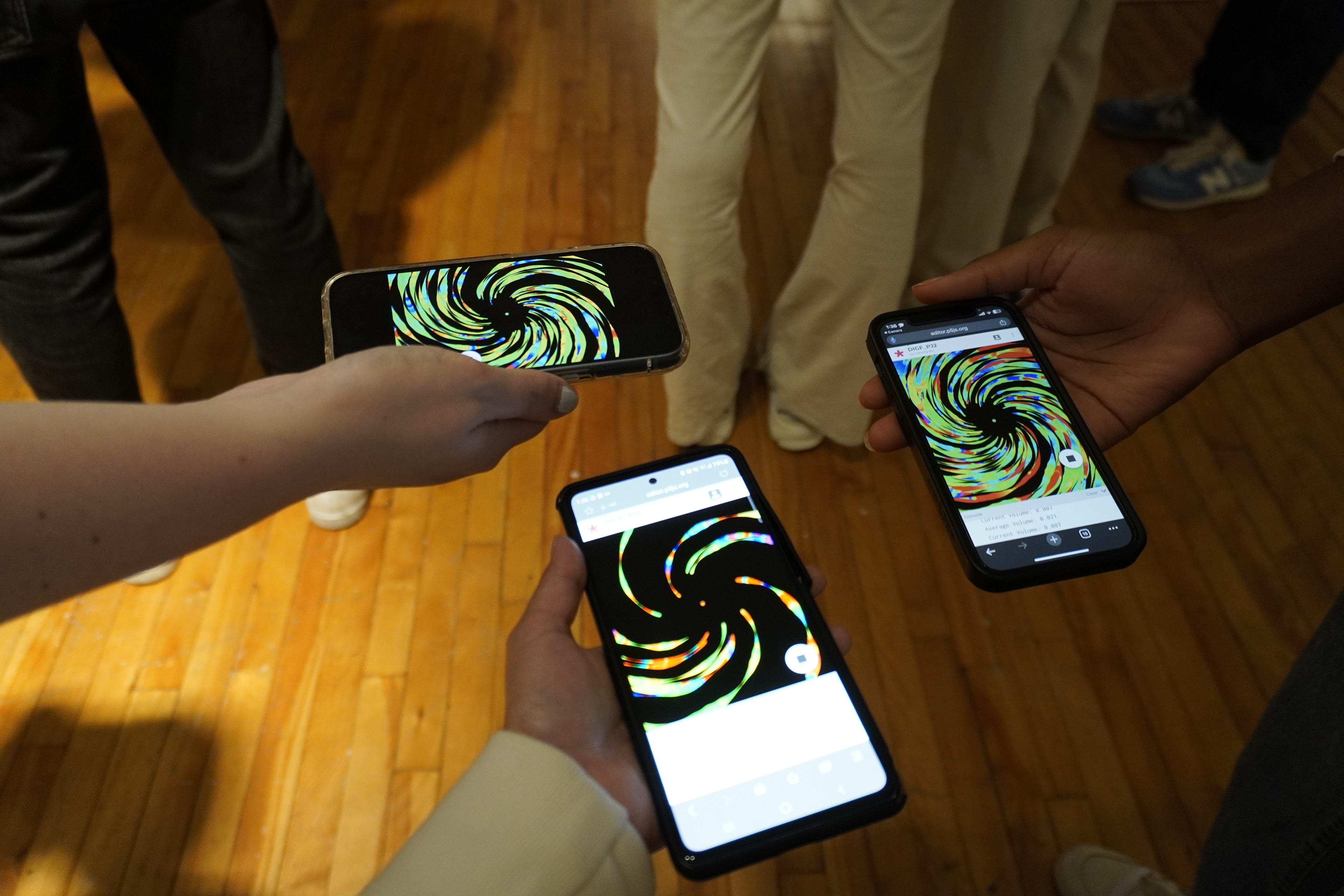
The “Future Garden” is an interactive installation that invites participants to engage with a speculative digital ecosystem, where the natural world is replaced by virtual representations. With the use of p5.js, mobile phones, and LED lights, the project explores the relationship between technology and nature, raising awareness about environmental care and the fragility of life. Visitors interact with the installation by speaking or singing gently into their phone to nurture a virtual seed into a flower.
Technical Implementation
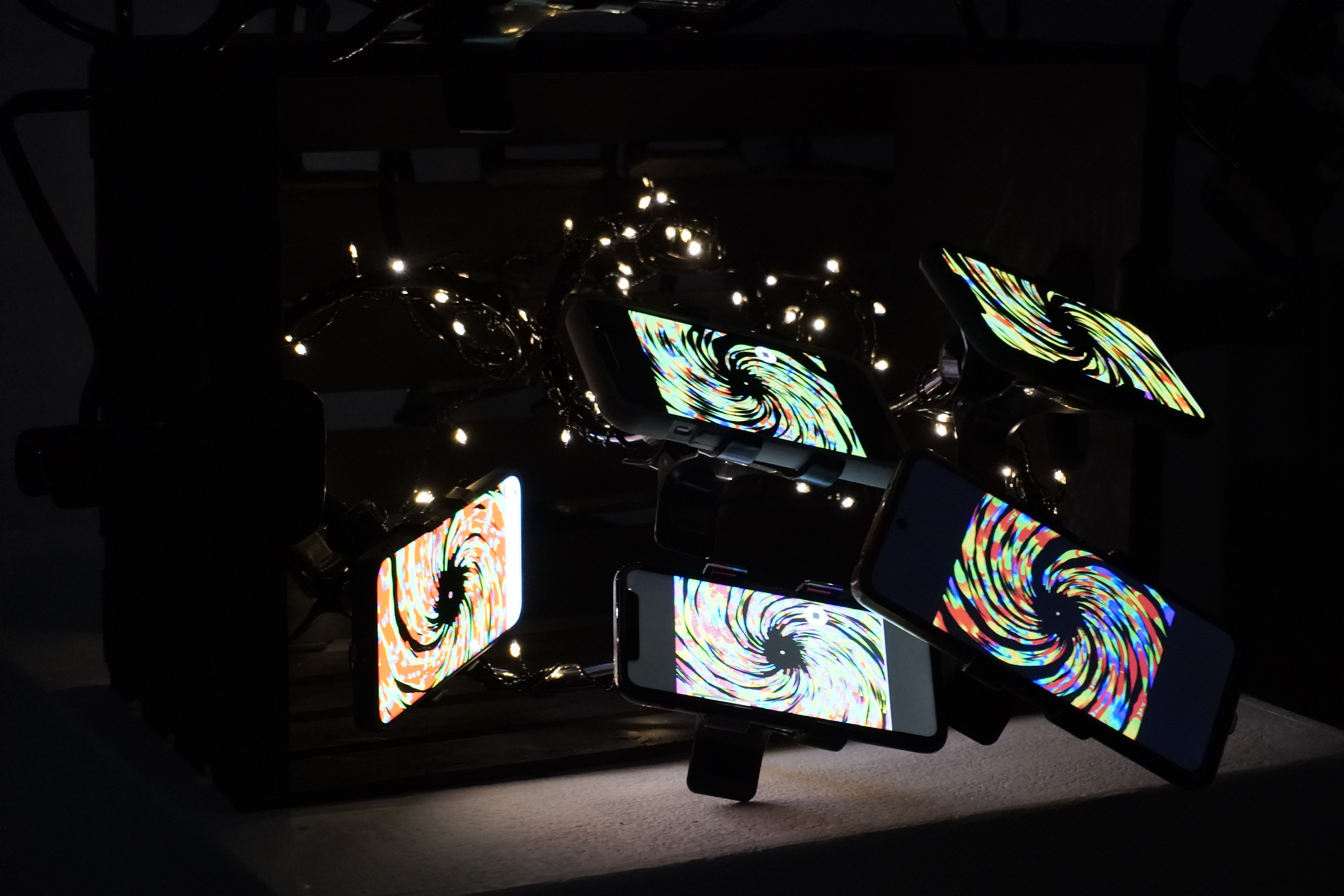
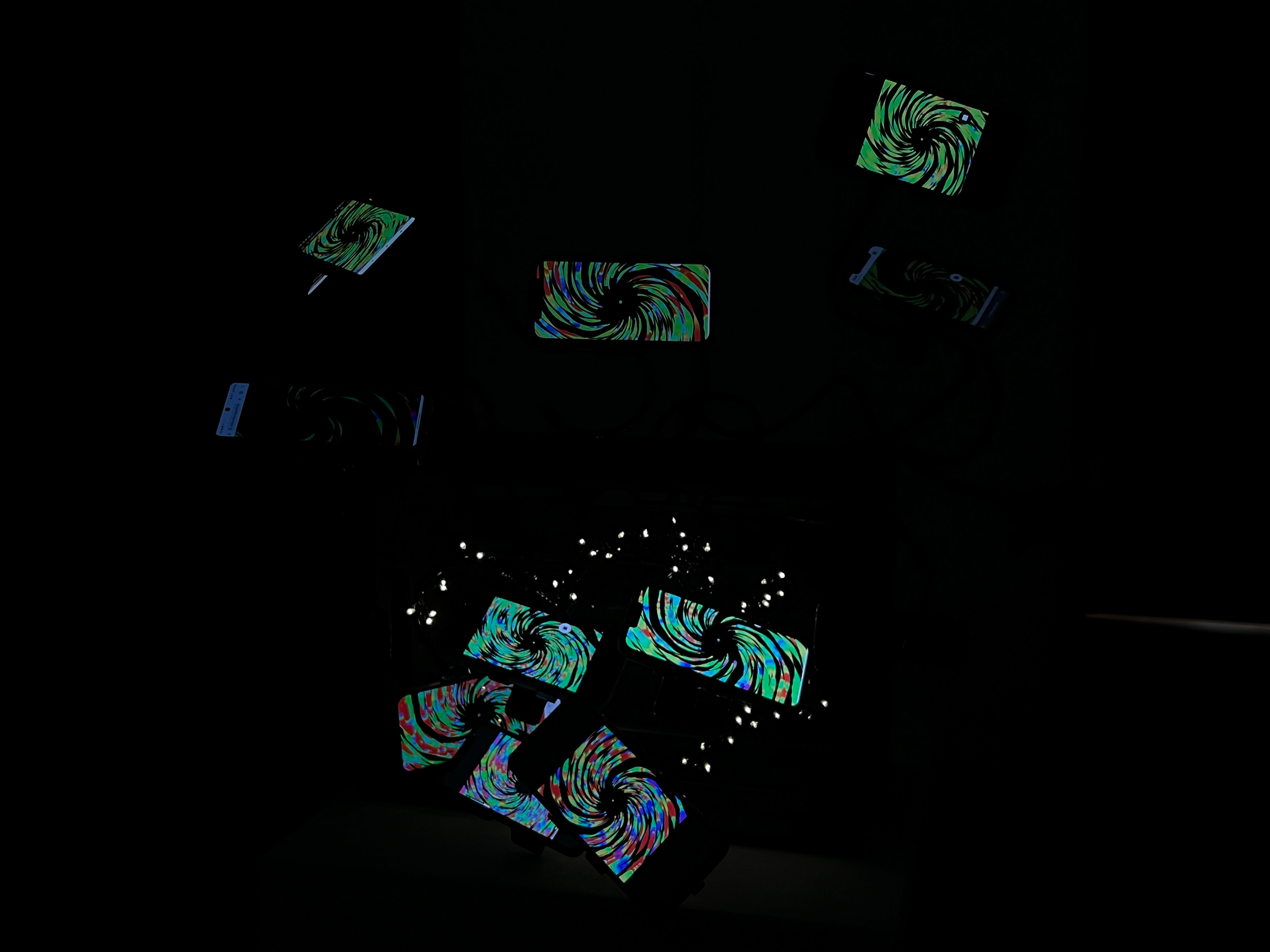
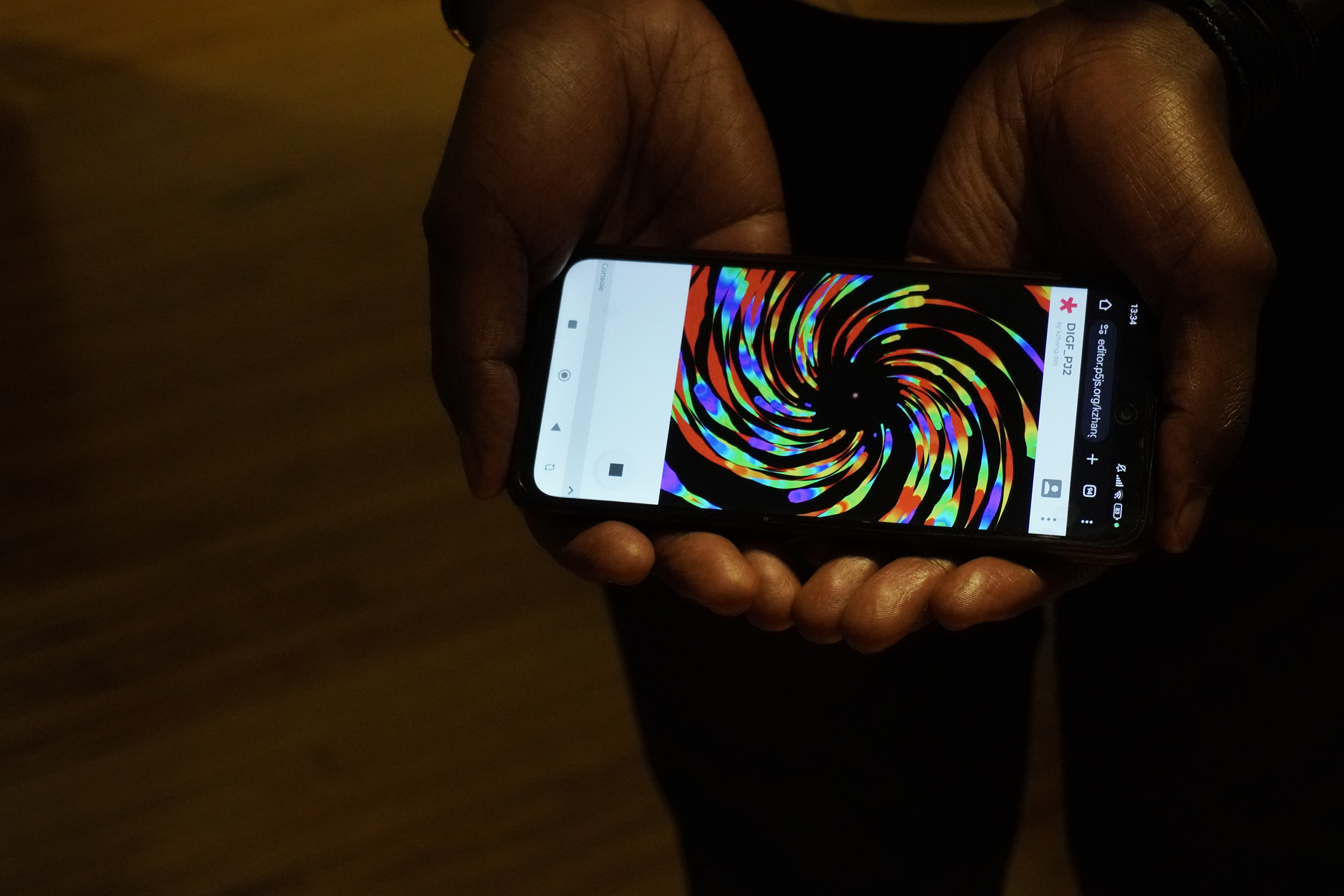
The project employs p5.js to create the interactive web experience, using microphone input to measure sound levels, which control the growth of a virtual flower. Gentle voices encourage growth, while louder sounds halt it, symbolizing the delicate care needed to nurture life. The ability to tilt the phone to change petal colors adds another layer of personalization, making each flower distinct.
Slight blinking LED light strings simulate the “breathing” of the digital garden, with the lights fading in and out to mimic organic breathing patterns. This adds a lifelike, immersive quality to the otherwise artificial environment. As participants attach their phones to the wooden branch structure, the installation evolves into a collaborative “garden” of digital plants.
Code
our code was developed using p5js, where we integrated tilt sensor and microphone data from In-class samples. these inputs where modified to achieve the best results, seamlessly aligning with our interactive experience.
Conceptual Framework
The idea for “Future Garden” emerged at the Digital Future Studio, inspired by the book Digital Garden: A World in Mutation. The book is a catalog of an exhibition featuring leading-edge Canadian and international artists, such as Doug Buis, Mat Collishaw, Gregory Crewdson, Rosemary Laing, and the duo Janine Cirincione and Michael Ferraro. The exhibition explores the effects of advanced technology on the living environment, considering how nature is being transformed both in reality and in perception as it becomes subordinated to technology. With themes of mutation, irony, and insight, the works provoke reflections on the impact of technological progress on our world.
Drawing from these ideas, “Future Garden” reimagines the concept of a garden by using our everyday connection devices as the building blocks for a new kind of nature. By framing mobile phones as precious elements of the installation, the project seeks to challenge participants’ understanding of value and care in a digitally mediated world.